
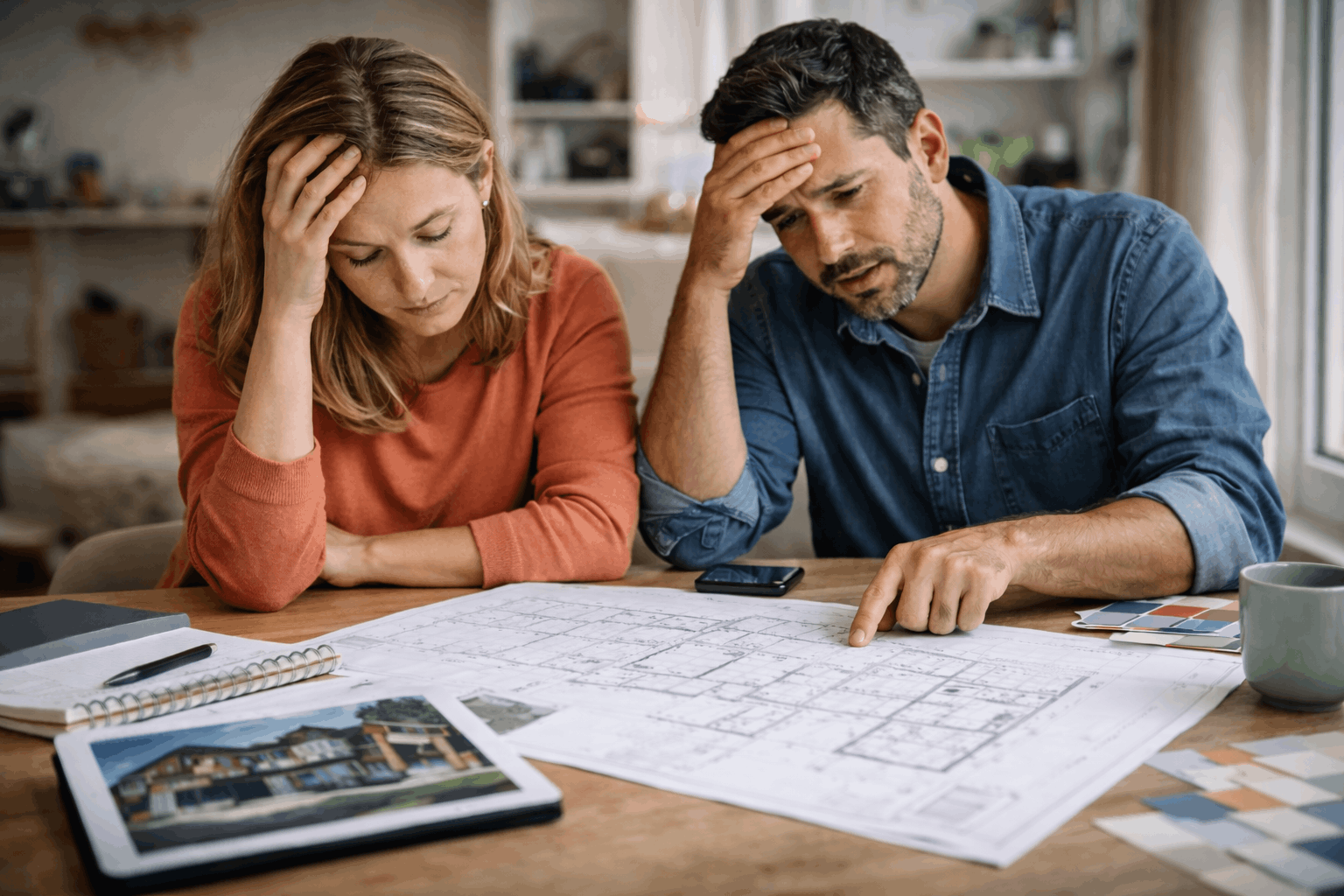
Building a custom home is often described as a once-in-a-lifetime opportunity. The freedom to design from scratch, choose materials intentionally, and tailor the home to your lifestyle is incredibly appealing. Yet many homeowners discover—sometimes too late—that the biggest challenges don’t come from construction itself, but from decisions made throughout the process.
Even after securing the right lot, costly mistakes can still happen at every stage of a custom build. Understanding where projects commonly go wrong helps homeowners protect their investment, reduce stress, and make more confident decisions from start to finish.
Why Custom Home Mistakes Are So Common
Custom homes involve more complexity than most buyers anticipate. Unlike buying a finished home, the process unfolds over time, requiring ongoing choices, coordination, and adjustments. Mistakes usually occur not because of a single bad decision, but because small missteps compound.
Many homeowners underestimate:
- how early decisions affect later stages
- how interconnected design, budget, and timeline really are
- how much clarity is needed before construction begins
These gaps often lead to frustration, delays, and unnecessary compromises.
Mistake #1: Starting the Build Without Clear Priorities
One of the most common mistakes when building a custom home is moving forward before priorities are fully defined. Some homeowners focus heavily on aesthetics early on without clearly identifying how they want the home to function day to day.
Without defined priorities, decisions become reactive. Features get added or removed late in the process, increasing complexity and cost.
Clear priorities help guide every choice, from layout decisions to material selections, and reduce second-guessing later on.
Mistake #2: Treating Design Decisions as Isolated Choices
In a custom home, no decision exists in isolation. Layout affects structure, structure affects cost, and cost affects material options. Homeowners often underestimate how one change influences multiple parts of the project.
Understanding the full scope of the process early on helps buyers see how design, engineering, and construction work together rather than as separate steps.
Mistake #3: Assuming the Timeline Will Stay Fixed
Another frequent mistake is assuming the build will progress exactly as planned. Custom homes take time to plan, permit, and build, and even well-managed projects require flexibility.
Homeowners who expect rigid timelines often experience unnecessary stress when approvals, revisions, or coordination take longer than expected.
Planning with realistic expectations—and some buffer—helps maintain perspective throughout the build.
Mistake #4: Underestimating the Mental Load of Decision-Making
Custom homes require hundreds of decisions, many of which feel minor but become permanent once built. Over time, this creates decision fatigue, especially for homeowners balancing work, family, and daily life.
Without a structured approach to decisions, homeowners may rush choices just to move forward, later realizing those decisions don’t fully support how they live.
Mistake #5: Confusing Customization With Over-Customization
Personalization is one of the main benefits of a custom home, but too much specialization can limit flexibility. Homes designed too narrowly around current preferences may struggle to adapt as needs change.
Thoughtful customization balances personal priorities with layouts and features that remain functional and flexible over time.
Mistake #6: Overlooking How Regulations Affect the Build
Local requirements shape more of the project than many buyers expect. Inspections, approvals, and compliance influence scheduling and coordination throughout construction.
Understanding that local regulations play a major role in how a project moves forward helps homeowners avoid frustration when certain steps take longer than anticipated.
Mistake #7: Comparing the Custom Build Too Closely to Other Options
Some homeowners constantly compare their custom build to buying a finished home, which can create unrealistic expectations. Custom projects involve trade-offs that don’t exist when purchasing new construction.
Buyers who are still comparing fundamental options often struggle to fully commit to the custom process.
Clarity around why you’re building custom helps reduce doubt along the way.
Mistake #8: Forgetting That Land Is Only the First Step
Even after purchasing the right property, many homeowners assume the hardest part is over. In reality, buying land is just the beginning, and mistakes made later can have a greater impact than issues during acquisition.
Buyers who want a deeper look at early-stage land considerations can explore the challenges covered in Buying Land for a Custom Home in Bellevue: Mistakes to Avoid, but the custom build itself presents an entirely different set of risks once the project is underway.
How to Avoid These Mistakes Altogether
Most mistakes when building a custom home come from unclear expectations rather than poor intentions. Homeowners who approach the process with patience, flexibility, and long-term thinking are far more likely to feel satisfied with the outcome.
Clear communication, structured decision-making, and realistic timelines make a meaningful difference throughout the build.
Final Thoughts
Building a custom home is a complex journey, but most mistakes are avoidable with the right perspective. Understanding where homeowners commonly go wrong helps you navigate the process with greater confidence and fewer surprises.
The goal isn’t perfection—it’s clarity, alignment, and decisions that support how you want to live in the home long after construction ends.
Concerned about making costly mistakes during your custom home build?
A clear conversation early can prevent problems later.
Contact Orca Custom Homes to discuss your project and next steps.
Frequently Asked Questions (FAQs)
What is the biggest mistake people make when building a custom home?
The most common mistake is starting the process without clearly defined priorities. Without a clear vision for how the home should function, decisions become reactive and harder to manage as the project progresses.
Are custom home mistakes usually expensive to fix?
Some are, but many mistakes affect time, stress, and long-term satisfaction rather than immediate cost. Early misalignment often leads to compromises that are difficult—or impossible—to change later.
Can mistakes still happen with an experienced builder?
Yes. Even with an experienced team, unclear expectations or rushed decisions from the homeowner can lead to issues. Collaboration and clarity on both sides are essential.
How can homeowners reduce stress during a custom build?
Understanding the process, setting realistic timelines, and avoiding constant comparison to other housing options all help reduce stress throughout the build.
Is it possible to correct mistakes once construction begins?
Some adjustments are possible, but changes made during construction often affect cost and timing. Addressing concerns early is always easier than correcting them later.