
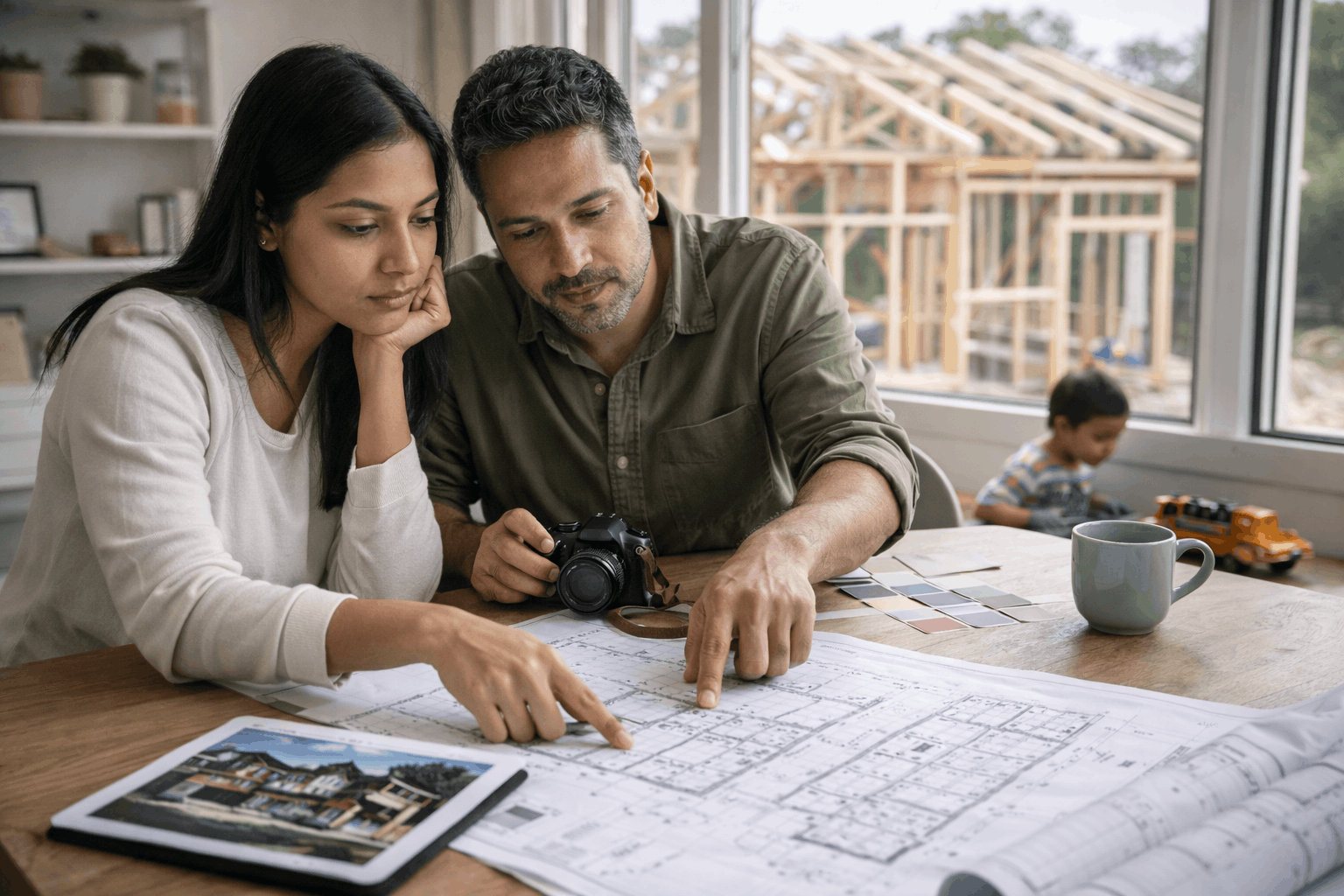
For many buyers, building a custom home represents the ultimate form of control: choosing the layout, materials, flow, and details that shape everyday life. At the same time, it is one of the most demanding paths to homeownership, requiring time, patience, and a willingness to make decisions long before construction begins.
So the real question is not whether custom homes are “better” than other options, but whether building one is actually worth it for you. The answer depends on how well your expectations, timeline, and priorities align with the realities of a custom build.
This guide explores when building a custom home truly makes sense, when it may not, and how to evaluate the decision realistically—before you commit to the process.
What “Worth It” Really Means in a Custom Home
When people ask whether building a custom home is worth it, they are rarely talking about cost alone. Value often shows up in less visible ways: how the home supports daily routines, how adaptable it is over time, and how many compromises you avoid years down the line.
For many homeowners, a custom home feels worth it because:
- The layout reflects how they actually live, not how homes are traditionally designed
- Rooms are sized and positioned intentionally, rather than adjusted later
- Long-term needs are considered from the beginning
- Major renovations are less likely after move-in
However, these benefits only matter if you are prepared for the complexity required to achieve them.
When Building a Custom Home Usually Makes Sense
You plan to stay in the home long term
Custom homes tend to deliver the greatest value over time. Buyers who expect to live in the home for many years benefit most from decisions that prioritize comfort, flexibility, and durability over short-term resale appeal.
Existing homes require constant compromise
In some markets, buyers find that available inventory consistently falls short—whether due to layout limitations, outdated systems, or renovation costs that add up quickly. In those cases, building from scratch may offer more control and fewer long-term trade-offs.
You understand the full scope of the process
Building a custom home involves far more than construction alone. From land evaluation to design coordination and permitting, understanding the full scope of the process helps buyers enter the project with realistic expectations.
When Building a Custom Home May Not Be the Right Choice
Your timeline is inflexible
Custom homes take time to plan, permit, and build. Buyers who need to move by a specific date may find the process restrictive, especially when approvals or design phases take longer than expected.
You want certainty above all else
While good planning reduces surprises, a custom build still involves evolving decisions. Buyers who prefer fixed costs and minimal variability may find this uncomfortable.
You are still comparing fundamental options
If you are deciding between building, buying new construction, or purchasing an existing home, committing to a custom build too early can create unnecessary pressure.
Trade-Offs Buyers Often Underestimate
Decision fatigue
Custom homes require hundreds of decisions, many of which feel small individually but permanent in combination. Over time, this can become mentally exhausting without the right guidance.
Emotional investment during construction
Because the home is personal, delays, revisions, or trade-offs often feel more intense than they would in a standard purchase.
Opportunity cost
Time spent designing and building is time not spent living in the finished home. For some buyers, that investment is worthwhile. For others, it becomes a source of frustration.
Location, Permits, and Regulations Can Change the Equation
Local regulations play a major role in whether building a custom home feels worthwhile. Zoning requirements, inspections, and approval timelines vary significantly by city and can influence both schedule and complexity.
Understanding these factors early allows buyers to evaluate feasibility before they become committed to a site or design.
How to Decide If Building a Custom Home Is Worth It for You
Before moving forward, it helps to step back and ask:
- Am I prioritizing personalization or convenience?
- Do I have flexibility in my timeline?
- Am I comfortable making many decisions over an extended period?
- Does building align with my long-term plans, not just my current situation?
Clear answers to these questions are often more important than budget estimates alone.
Final Thoughts
Building a custom home can be deeply rewarding when expectations, timing, and priorities align. When they do not, the same process can feel unnecessarily stressful.
The goal is not to decide quickly, but to decide clearly—so the home you build truly supports the life you intend to live in it.
Still unsure if building a custom home is the right move for you?
A conversation focused on clarity—not pressure—can help you evaluate your options with confidence.
Contact Orca Custom Homes to talk through your situation and next steps.
Frequently Asked Questions (FAQs)
Is building a custom home always more expensive than buying one?
Not necessarily. While a custom home often has higher upfront costs, it can reduce future expenses related to renovations, inefficiencies, or compromises. The total cost comparison depends on how long you plan to live in the home, the quality of construction, and how closely the design matches your needs from the start.
How long do most people live in a custom home?
Many custom homeowners plan to stay significantly longer than buyers of spec or resale homes. Because the home is designed around personal preferences and long-term needs, owners are often less motivated to move again quickly.
What causes the most stress during a custom home project?
Stress typically comes from unclear expectations, rushed decisions, and underestimating the impact of permitting or design changes. Buyers who understand the process early and work with an experienced team tend to navigate challenges more smoothly.
Can a custom home still have strong resale value?
Yes. Homes that balance personalization with functional layouts, durable materials, and desirable locations often perform well on resale. Highly specialized features may appeal to a narrower audience, which is why thoughtful planning matters.
Is it possible to slow down or pause a custom home project?
In some situations, yes—but doing so can affect costs, timelines, and coordination. Pausing is usually easier earlier in the process, before construction begins, which is why early clarity is so important.