
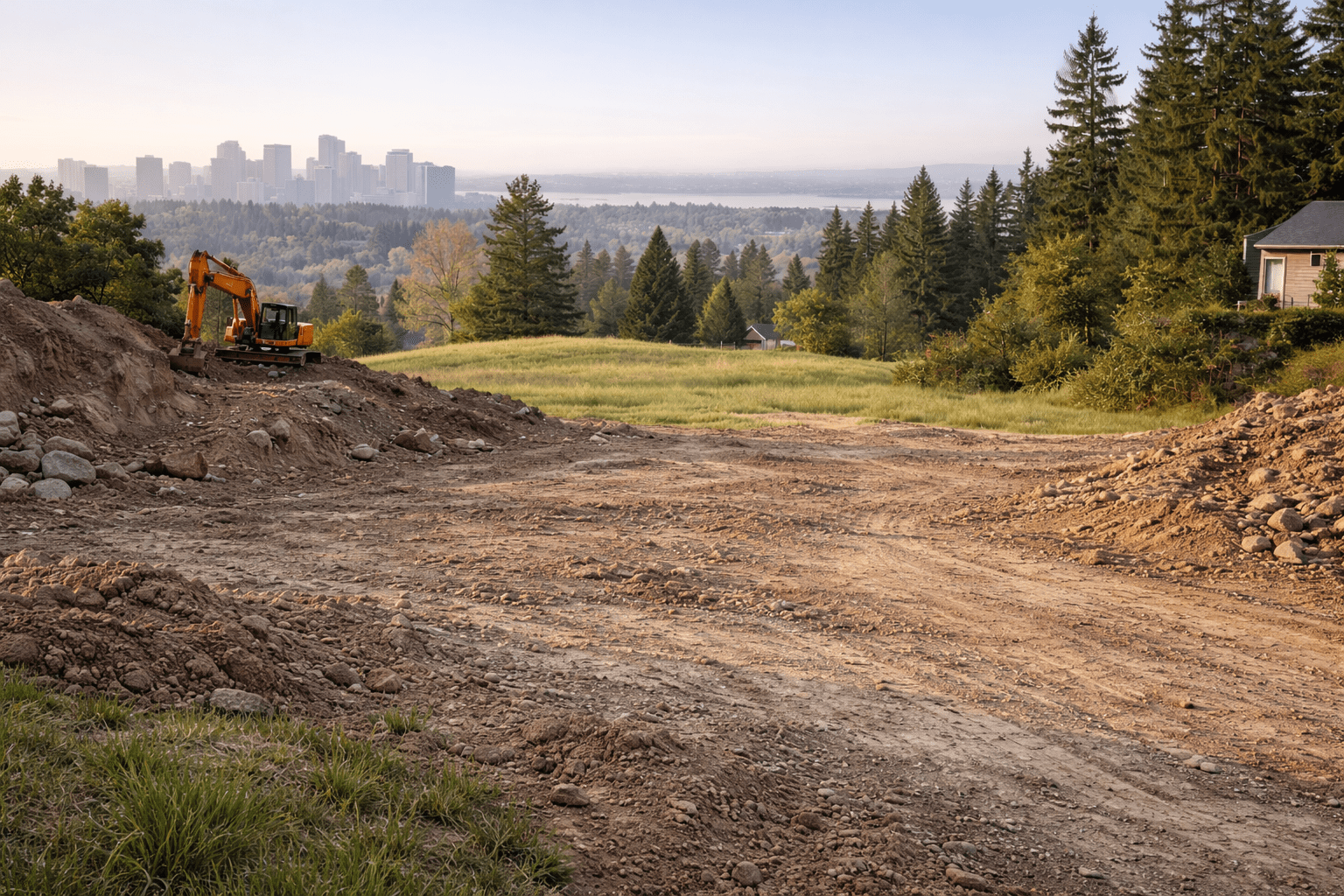
Buying land is often the first step toward building a custom home—but in reality, it’s also one of the most complex and misunderstood stages of the process. In markets like Bellevue, where zoning rules, site conditions, and permitting requirements are highly specific, purchasing land without the right due diligence can lead to costly delays, redesigns, or even unbuildable lots.
Many buyers focus on location, views, or price per square foot, assuming that residential land is inherently buildable. Unfortunately, that assumption is one of the most common—and expensive—mistakes made when planning a custom home.
This guide outlines the most frequent errors buyers make when purchasing land for a custom home in Bellevue, and how early planning can help avoid them.
Mistake #1: Assuming a Residential Lot Is Automatically Buildable
Not all residentially zoned lots are equally buildable. Even when zoning appears straightforward, site-specific factors can significantly affect what can actually be constructed.
Common constraints include:
- Steep slopes or challenging topography
- Soil conditions that require special foundations
- Limited access for construction equipment
- Utility availability or connection limitations
A lot that looks ideal on paper may require substantial additional investment to make it suitable for a custom home.
Mistake #2: Underestimating Zoning and Permitting Complexity
Bellevue has detailed zoning overlays, neighborhood standards, and review processes that influence setbacks, height limits, lot coverage, and environmental considerations.
Many buyers only discover these restrictions after purchasing land, when design options are already limited.
In reality, local permitting and planning requirements shape not only what can be built, but how long the approval process may take and how much flexibility exists in design.
Mistake #3: Buying Land Before Talking to a Builder
One of the most common missteps is purchasing land before consulting with a builder or construction professional. While a real estate agent can help evaluate market value, they may not assess build feasibility from a construction standpoint.
Without early builder input, buyers risk:
- Selecting lots that dramatically increase construction costs
- Missing opportunities to optimize layout or orientation
- Underestimating site preparation expenses
Involving a builder early helps align land selection with realistic construction expectations.
Mistake #4: Ignoring Site Preparation and Hidden Costs
Land costs extend far beyond the purchase price. Site preparation expenses can represent a significant portion of the total project budget, especially on challenging lots.
These costs may include:
- Grading and excavation
- Retaining walls
- Utility extensions
- Tree retention or environmental mitigation
Failing to account for these factors upfront often leads to budget surprises later.
Mistake #5: Valuing Views and Location Over Long-Term Feasibility
Views, privacy, and neighborhood appeal are important—but they shouldn’t outweigh feasibility. Lots with dramatic slopes, limited buildable area, or strict environmental constraints can reduce design flexibility and increase long-term maintenance costs.
A well-chosen lot balances location with buildability, allowing the home to function efficiently over time.
Why Early Planning Changes the Outcome
Many of these mistakes stem from treating land purchase as a purely real estate decision. In reality, land selection is a construction decision made early.
Working with a builder early allows buyers to:
- Evaluate feasibility before committing to a purchase
- Understand cost implications tied to site conditions
- Align design goals with permitting realities
How the Right Process Reduces Risk
A structured approach to land evaluation helps buyers move forward with confidence. When land assessment, design planning, and construction strategy are aligned from the beginning, projects are far less likely to encounter delays or costly redesigns.
This type of coordination is a key part of a successful custom home planning process, especially in complex local markets.
Final Thoughts: Land Is the Foundation of the Entire Project
Land decisions set the trajectory for the entire custom home process. In a market like Bellevue, taking time to evaluate feasibility, costs, and regulations before purchasing land can prevent delays and protect your overall investment.
If you’re considering purchasing land for a custom home, early guidance can make a significant difference.
Contact Orca Custom Homes to discuss your project and evaluate land feasibility before committing—so key decisions don’t lock in unnecessary costs.
Frequently Asked Questions About Buying Land for a Custom Home
Can I assume a residential lot is ready to build on?
No. Residential zoning only indicates how a property may be used, not whether it is immediately suitable for construction. Factors such as slope, soil conditions, access for construction equipment, utility availability, drainage requirements, and environmental constraints can all affect buildability. In many cases, a lot that appears ideal on paper requires significant site preparation or design limitations that aren’t obvious without a feasibility review.
Should I talk to a builder before buying land for a custom home?
Yes—ideally before making an offer. A builder can evaluate whether the lot supports your budget, design goals, and timeline. Early input helps identify potential challenges related to grading, foundation requirements, permitting complexity, and overall construction cost. Involving a builder early often prevents buyers from purchasing land that limits design flexibility or creates avoidable cost overruns later.
How much do site preparation costs typically add to a custom home project?
Site preparation costs vary widely depending on the lot. Flat, well-serviced lots may require minimal preparation, while sloped or constrained properties can add substantial expenses for grading, retaining walls, drainage systems, utility extensions, or environmental mitigation. Because these costs are highly site-specific, estimating them early is critical to understanding the true cost of building on a particular lot.
Do permitting and zoning timelines affect when construction can begin?
Absolutely. In markets like Bellevue, zoning reviews, environmental considerations, and neighborhood-specific regulations can significantly impact approval timelines. Some lots require additional studies or design revisions before permits are issued, which can delay construction start dates. Understanding these timelines before purchasing land helps buyers plan realistically and avoid frustration later in the process.
What makes a lot a good choice for a custom home?
A good lot balances location with feasibility. Beyond views or neighborhood appeal, the best lots allow for efficient site preparation, reasonable permitting timelines, flexible design options, and predictable long-term performance. A well-chosen lot supports the home’s function, budget, and future resale value rather than limiting them.