
One of the first questions homeowners ask when considering a custom build is how long the process will take. While it’s tempting to look for a single number, the reality is that custom home timelines vary significantly based on design complexity, site conditions, permitting, and coordination across multiple phases.
Rather than offering a fixed estimate, this guide breaks down the custom home timeline into clear stages—helping you understand what happens at each step, what can affect timing, and how to plan with realistic expectations, particularly for custom homes built in markets like Bellevue and the greater Washington area.
Why There’s No Single Timeline for Custom Homes
Unlike spec homes or production builds, custom homes are designed and built specifically for a homeowner and a particular site. This means timelines are influenced by variables such as:
- Design complexity and level of customization
- Site conditions, grading, and access
- Local permitting and inspections
- Material selections and availability
- Coordination between architects, engineers, and builders
Because these factors vary from project to project, custom home timelines are best understood as a sequence of phases rather than a single duration.
Phase 1: Planning and Design
The planning and design phase lays the foundation for the entire project. During this stage, homeowners work with architects and builders to define layout, structural systems, and design intent.
- Key activities include:
- Initial concept development
- Architectural and engineering design
- Budget alignment and feasibility reviews
Decisions made during this phase directly affect permitting and construction efficiency later on.
Phase 2: Permits and Approvals
Once plans are developed, they must be reviewed and approved by the local permitting authority. In cities like Bellevue, this phase can be substantial due to zoning, land-use, and safety requirements.
Permitting timelines vary based on:
- Project complexity
- Completeness of submitted plans
- Site-specific conditions
- City review workload
It’s important to treat permitting as a dedicated project phase, not something that happens passively alongside other work.
Phase 3: Pre-Construction Preparation
After permits are issued, builders move into pre-construction planning. This phase focuses on coordination and sequencing before physical work begins.
Typical activities include:
- Final scheduling and trade coordination
- Ordering long-lead materials
- Site preparation planning
Strong pre-construction planning helps reduce delays once construction is underway.
Phase 4: Construction
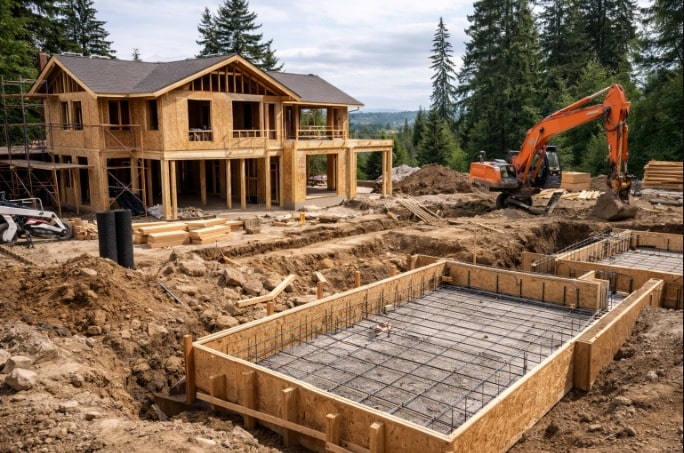
Construction is the most visible phase of the process, but it’s also the one most affected by earlier decisions. This stage generally progresses through several milestones:
Site Work and Foundations
Includes excavation, grading, utilities, and foundation work.
Framing and Structural Systems
The home’s structure takes shape, including floors, walls, and roof framing.
Mechanical, Electrical, and Plumbing
Core systems are installed and coordinated before walls are closed.
Interior and Exterior Finishes
This includes insulation, drywall, flooring, cabinetry, fixtures, and exterior finishes.
Each step builds on the previous one, making sequencing and inspection approvals critical.
Phase 5: Inspections and Final Approval
Custom homes require inspections at multiple stages of construction. These inspections ensure work meets code requirements and must be approved before moving forward.
Final approval allows the home to move toward completion and occupancy.
What Can Affect a Custom Home Timeline
Several factors can extend or compress a custom home timeline, including:
- Design changes made during construction
- Permit revisions or additional review requests
- Weather conditions
- Material availability or lead times
- Inspection scheduling
Understanding these variables helps homeowners plan with flexibility rather than rigid expectations.
Custom Homes vs. Spec Homes: Timeline Differences
Spec homes follow standardized designs and processes, which often results in more predictable timelines. Custom homes, by contrast, prioritize personalization and site-specific solutions, which can add time but deliver a tailored result.
How a Custom Home Builder Helps Keep Projects on Track
Experienced custom builders play a critical role in managing timelines by:
- Coordinating designers, trades, and inspectors
- Anticipating permit and inspection requirements
- Sequencing work efficiently
- Communicating timeline impacts early
When to Start Timeline Planning
Timeline planning should begin early—often before finalizing land purchase or design decisions. A realistic understanding of how long each phase can take helps homeowners make informed decisions and avoid unnecessary stress later in the process.
If you’re considering a custom home and want a realistic, phase-by-phase understanding of how long your project may take, schedule a consultation with a custom home builder to discuss your goals, site conditions, and planning assumptions before moving forward.
Frequently Asked Questions (FAQs)
How long does it typically take to build a custom home?
There is no single timeline that applies to all custom homes. The process depends on design complexity, site conditions, permitting requirements, and construction coordination. Most projects are best understood by phases rather than a fixed duration.
Why do custom homes take longer than spec homes?
Custom homes involve unique designs, individualized permitting review, and site-specific construction details. These factors require additional coordination and review compared to standardized spec homes.
Does permitting significantly affect the overall timeline?
Yes. Permitting can be a substantial part of the timeline, especially in cities with detailed zoning and review requirements. Planning for permitting as a separate phase helps avoid unrealistic expectations.
Can design changes during construction affect timing?
Yes. Changes made after construction begins often require revisions, additional approvals, or rework, all of which can extend the timeline.
When should I talk to a builder about timeline expectations?
Ideally, timeline discussions should happen early—before finalizing design decisions or assumptions about move-in dates. Early conversations help align expectations and reduce surprises later.